



Build and maintain frontend applications for an AI platform, including interactive embedding and model-output visualizations, self-service tools, internal AI-team tooling, and executive prototypes. Integrate React or Python-based applications with REST APIs, Databricks Apps, Unity Catalog, and asynchronous job workflows. Own frontend architecture, testing, documentation, production support, and usability for technical and nontechnical audiences while collaborating with software, data, and AI engineers.
Our Purpose
Mastercard powers economies and empowers people in 200+ countries and territories worldwide. Together with our customers, we're helping build a sustainable economy where everyone can prosper. We support a wide range of digital payments choices, making transactions secure, simple, smart and accessible. Our technology and innovation, partnerships and networks combine to deliver a unique set of products and services that help people, businesses and governments realize their greatest potential.
Title and Summary
Senior UI Developer
Overview
Mastercard is seeking a UI Developer to join an AI product team building cutting edge foundation model capabilities with enterprise wide impact. You'll design and build the applications that bring advanced AI capabilities to life. Turning powerful, complex model outputs into clear, intuitive, and interactive experiences for the people who rely on them. You will join a team of AI Engineers, Software Developers, Data Scientists and MLOps to bring these capabilities to market.
In this role, you will be responsible for the design, development, and maintenance of the platform's frontend applications, spanning both internal tooling and external-facing self-service tools.
Key responsibilities:
Design and build advanced, interactive visualization tooling for embeddings and model outputs. Including exploratory views of embedding clusters/similarity (e.g., dimensionality-reduced spatial views), interactive drill-down, filtering, and comparison across model/embedding versions.
Design and build self-service applications for end users. Including submitting requests (e.g., filter-based embedding generation), tracking job status, and retrieving results, integrating against the platform's API layer.
Design and build prototypes for future product versions and executive level demos.
Design and build internal tooling for own AI teams, to streamline product advancement.
Build and maintain applications on Databricks App hosting, including understanding its deployment model, constraints, and integration points with Unity Catalog and the platform's own APIs.
Integrate frontend applications against the platform's API layer, working closely with the Software Engineers to align on contract, authentication, and versioning as the API evolves.
Collaborate with Lead Data Engineer and Senior AI Engineer on internal tooling requirements, translating their workflow needs into practical, well-designed interfaces.
Own frontend code quality and maintainability. Component structure, testing, and documentation, to a standard consistent with the rest of the engineering team's practices.
Design with the platform's varied user base in mind. From highly technical internal AI engineers to product/software teams who may have less context on the underlying model architecture.
Contribute to frontend architecture decisions as the platform's application surface grows, including recommending patterns and tooling within what Databricks Apps and the organization's standards support.
Support production issues affecting frontend applications, including troubleshooting and coordinating with backend roles when an issue spans both layers.
All About You
Required skills and experience:
Strong, production-level frontend development experience in React, and/or Python-based data-app frameworks (Streamlit or Dash).
Component architecture, state management, and building applications meant to be maintained and extended over time, not one-off prototypes.
Experience integrating frontend applications against REST APIs. Including handling authentication, asynchronous job patterns (submit, poll/callback, retrieve), and designing around API versioning.
Familiarity with visualization libraries capable of advanced/interactive rendering (e.g., D3.js, deck.gl, Plotly, or similar).
Familiarity with Databricks Apps as a hosting/deployment model, including its constraints and how it serves React, Streamlit, and Dash applications specifically. Direct Databricks experience is a strong plus.
Advanced data visualization experience, including interactive/exploratory tooling. Not just static charts, but genuinely interactive interfaces: filtering, drill-down, dynamic re-rendering, and ideally experience visualizing high-dimensional or embedding-style data.
Comfortable designing for mixed technical audiences. From AI engineers who want dense, fast access to detail, to end users who need simplicity and guardrails.
Fluency reading/writing SQL or querying a governed data platform (e.g., Unity Catalog).
Strong UI/UX instincts. Able to make reasonable design decisions independently rather than needing every interaction pattern specified, while knowing when to loop in design/product input.
Solid testing and code quality practices for frontend code. Component/unit testing, and comfort working within CI/CD pipelines the rest of the team maintains.
Clear communicator, able to work directly with backend, data, and AI engineering roles to understand what an interface actually needs to expose.
Comfortable operating in a fast-moving, evolving environment.
Corporate Security Responsibility
All activities involving access to Mastercard assets, information, and networks comes with an inherent risk to the organization and, therefore, it is expected that every person working for, or on behalf of, Mastercard is responsible for information security and must:
Mastercard powers economies and empowers people in 200+ countries and territories worldwide. Together with our customers, we're helping build a sustainable economy where everyone can prosper. We support a wide range of digital payments choices, making transactions secure, simple, smart and accessible. Our technology and innovation, partnerships and networks combine to deliver a unique set of products and services that help people, businesses and governments realize their greatest potential.
Title and Summary
Senior UI Developer
Overview
Mastercard is seeking a UI Developer to join an AI product team building cutting edge foundation model capabilities with enterprise wide impact. You'll design and build the applications that bring advanced AI capabilities to life. Turning powerful, complex model outputs into clear, intuitive, and interactive experiences for the people who rely on them. You will join a team of AI Engineers, Software Developers, Data Scientists and MLOps to bring these capabilities to market.
In this role, you will be responsible for the design, development, and maintenance of the platform's frontend applications, spanning both internal tooling and external-facing self-service tools.
Key responsibilities:
Design and build advanced, interactive visualization tooling for embeddings and model outputs. Including exploratory views of embedding clusters/similarity (e.g., dimensionality-reduced spatial views), interactive drill-down, filtering, and comparison across model/embedding versions.
Design and build self-service applications for end users. Including submitting requests (e.g., filter-based embedding generation), tracking job status, and retrieving results, integrating against the platform's API layer.
Design and build prototypes for future product versions and executive level demos.
Design and build internal tooling for own AI teams, to streamline product advancement.
Build and maintain applications on Databricks App hosting, including understanding its deployment model, constraints, and integration points with Unity Catalog and the platform's own APIs.
Integrate frontend applications against the platform's API layer, working closely with the Software Engineers to align on contract, authentication, and versioning as the API evolves.
Collaborate with Lead Data Engineer and Senior AI Engineer on internal tooling requirements, translating their workflow needs into practical, well-designed interfaces.
Own frontend code quality and maintainability. Component structure, testing, and documentation, to a standard consistent with the rest of the engineering team's practices.
Design with the platform's varied user base in mind. From highly technical internal AI engineers to product/software teams who may have less context on the underlying model architecture.
Contribute to frontend architecture decisions as the platform's application surface grows, including recommending patterns and tooling within what Databricks Apps and the organization's standards support.
Support production issues affecting frontend applications, including troubleshooting and coordinating with backend roles when an issue spans both layers.
All About You
Required skills and experience:
Strong, production-level frontend development experience in React, and/or Python-based data-app frameworks (Streamlit or Dash).
Component architecture, state management, and building applications meant to be maintained and extended over time, not one-off prototypes.
Experience integrating frontend applications against REST APIs. Including handling authentication, asynchronous job patterns (submit, poll/callback, retrieve), and designing around API versioning.
Familiarity with visualization libraries capable of advanced/interactive rendering (e.g., D3.js, deck.gl, Plotly, or similar).
Familiarity with Databricks Apps as a hosting/deployment model, including its constraints and how it serves React, Streamlit, and Dash applications specifically. Direct Databricks experience is a strong plus.
Advanced data visualization experience, including interactive/exploratory tooling. Not just static charts, but genuinely interactive interfaces: filtering, drill-down, dynamic re-rendering, and ideally experience visualizing high-dimensional or embedding-style data.
Comfortable designing for mixed technical audiences. From AI engineers who want dense, fast access to detail, to end users who need simplicity and guardrails.
Fluency reading/writing SQL or querying a governed data platform (e.g., Unity Catalog).
Strong UI/UX instincts. Able to make reasonable design decisions independently rather than needing every interaction pattern specified, while knowing when to loop in design/product input.
Solid testing and code quality practices for frontend code. Component/unit testing, and comfort working within CI/CD pipelines the rest of the team maintains.
Clear communicator, able to work directly with backend, data, and AI engineering roles to understand what an interface actually needs to expose.
Comfortable operating in a fast-moving, evolving environment.
Corporate Security Responsibility
All activities involving access to Mastercard assets, information, and networks comes with an inherent risk to the organization and, therefore, it is expected that every person working for, or on behalf of, Mastercard is responsible for information security and must:
- Abide by Mastercard's security policies and practices;
- Ensure the confidentiality and integrity of the information being accessed;
- Report any suspected information security violation or breach, and
- Complete all periodic mandatory security trainings in accordance with Mastercard's guidelines.
Mastercard Dublin, Dublin, IRL Office
Mastercard Dublin Tech Hub Office
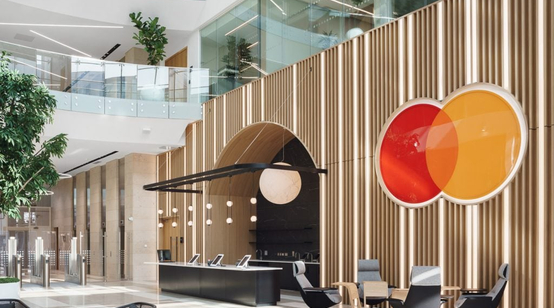
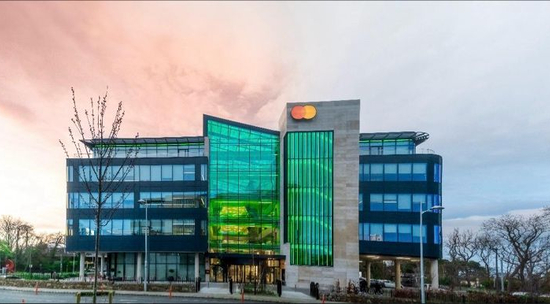


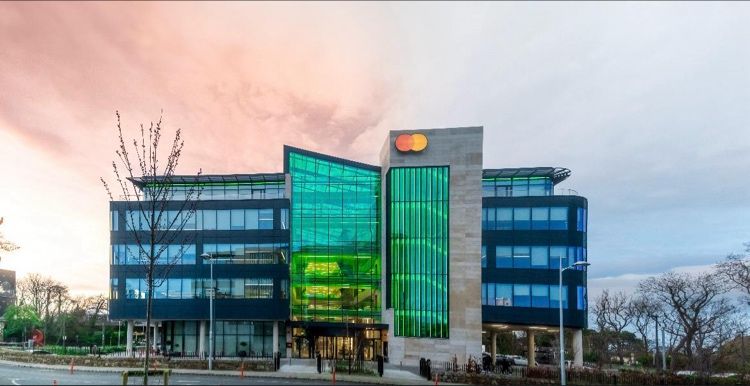

One South County, South County Business Park, Dublin, Dublin, Ireland, D18
Similar Jobs at Mastercard
Blockchain • Fintech • Payments • Consulting • Cryptocurrency • Cybersecurity • Quantum Computing
Build and maintain frontend applications for AI products, including interactive embedding and model-output visualizations, self-service tools, internal AI-team tooling, and executive prototypes. Integrate React or Python-based applications with REST APIs, Databricks Apps, Unity Catalog, and asynchronous job workflows. Own frontend architecture, testing, documentation, production support, and code quality while collaborating with software, data, and AI engineers to serve both technical and nontechnical users.
Top Skills:
Ci/CdD3.JsDashDatabricks AppsDeck.GlPlotlyPythonReactRest ApisSQLStreamlitUnity Catalog
Blockchain • Fintech • Payments • Consulting • Cryptocurrency • Cybersecurity • Quantum Computing
Build and maintain production frontend applications for AI products using React and/or Python data-app frameworks. Develop interactive visualizations for embeddings and model outputs, self-service tools, internal AI-team tooling, and executive prototypes. Integrate applications with REST APIs, Databricks Apps, Unity Catalog, and asynchronous job workflows. Own frontend architecture, testing, documentation, production support, and user experience for both technical and nontechnical audiences.
Top Skills:
Ci/CdD3.JsDashDatabricks AppsDeck.GlPlotlyPythonReactRest ApisSQLStreamlitUnity Catalog
Blockchain • Fintech • Payments • Consulting • Cryptocurrency • Cybersecurity • Quantum Computing
Build and maintain production frontend applications for AI platform tooling, including interactive embedding and model-output visualizations, self-service workflows, prototypes, and internal tools. Integrate React or Python-based applications with REST APIs, Databricks Apps, Unity Catalog, and asynchronous job workflows. Own frontend architecture, testing, documentation, production support, and usability for technical and nontechnical audiences while collaborating with software, data, and AI engineers.
Top Skills:
Ci/CdD3.JsDashDatabricks AppsDeck.GlPlotlyPythonReactRest ApisSQLStreamlitUnity Catalog
What you need to know about the Dublin Tech Scene
From Bono and Oscar Wilde to today's tech leaders, Dublin has always attracted trailblazers, with more than 70,000 people working in the city's expanding digital sector. Continuing its legacy of drawing pioneers, the city is advancing rapidly. Ireland is now ranked as one of the top tech clusters in the region and the number one destination for digital companies, with the highest hiring intention of any region across all sectors.
